
Introduction
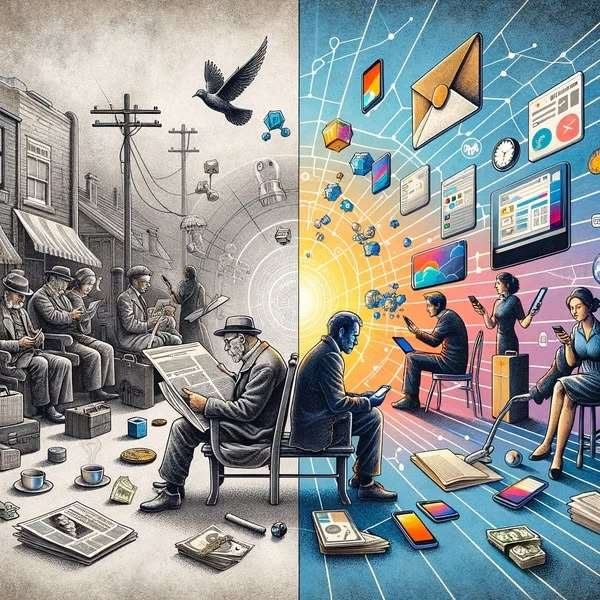
For decades, families across India believed in one simple formula: study hard, earn a degree, secure a steady paycheck, and live better than your parents. Today, the future of jobs looks very different, and Zoho’s Sridhar Vembu says that old deal is breaking..
Today, that formula is under pressure. Artificial intelligence and automation are changing how companies hire, and many graduates struggle to find jobs matching their qualifications.
Zoho founder Sridhar Vembu recently highlighted China’s graduate unemployment crisis and warned that India must act now, before similar problems arrive in our own job market.
So the big question is simple: is a degree still enough in the AI era? Let us explore it honestly, with facts and practical steps.
Beyond the Steady Paycheck: Is a Degree Still Enough in the AI Era?
A degree still matters, but it is no longer a guarantee. In the AI era, skills, adaptability, and self-employment decide who truly thrives.
The Old Deal: Study Hard, Get a Job, Stay Secure
For generations, the steady paycheck meant safety. A government or corporate job promised regular income, respect, and a comfortable retirement for the whole family.
Parents sacrificed savings to fund college education, believing the degree was a ticket to security. For a long time, that belief was largely correct.
Universities expanded, graduate numbers grew, and companies hired in large volumes. The system worked because jobs were growing as fast as the number of graduates.
But that balance has shifted. Jobs are no longer growing at the same speed, while the number of degree holders keeps rising every single year.
This is why Sridhar Vembu says the old deal is breaking. The promise of a secure job after graduation is becoming harder to keep.
China’s Warning: Educated Youth Without Jobs
China is called the factory of the world, with strong technology and a massive trade surplus. Yet it struggles to create jobs for its educated youth.
According to Vembu’s post, about seventy percent of unemployed people aged twenty to twenty-four in China hold university degrees. That number is shocking.
This shows that economic strength alone does not guarantee employment. Even a powerful economy can fail to absorb millions of qualified graduates.
China’s situation is a warning sign for every country that depends on the steady paycheck model, including India, with its huge young population.
The lesson is clear: waiting for jobs to appear is risky. Societies must prepare new ways for young people to earn and contribute.
How AI and Automation Are Changing Jobs
Automation has already replaced many repetitive tasks in factories, banks, and offices. Now AI is entering areas once considered safe, like writing, coding, and analysis.
Tasks that took hours can now be completed in minutes by AI tools. Companies need fewer people for routine work and more for creative thinking.
Entry-level jobs are especially affected, because they often involve simple, repeatable tasks. These are exactly the tasks that AI handles best today.
This does not mean all jobs will disappear. It means the nature of jobs is changing faster than most education systems can adapt.
Workers who learn to use AI will gain an advantage, while those who ignore it risk falling behind in the future of work.
Why the Steady Paycheck Model Is Under Pressure
Vembu points out that modern education trains young people for steady paycheck jobs. Those very jobs are now facing serious challenges from automation and AI.
Companies are trying to reduce costs, and technology helps them do more with fewer employees. This directly affects hiring numbers for fresh graduates.
The big corporate job is actually a relatively recent idea in history. For most of human history, people earned through trade, farming, and craft.
Even in America, self-employment and small business were the foundation of prosperity until the middle of the twentieth century, as Vembu reminds us.
So moving beyond the steady paycheck is not a strange idea. It may simply be a return to something older and stronger.
Degree vs Skills: What Employers Want Now
Employers today care less about the name of your degree and more about what you can actually do. Practical ability now speaks louder than marks.
Skills like problem solving, communication, data handling, and digital tools are in high demand. A certificate alone rarely proves these abilities.
Many top companies have already reduced degree requirements for certain roles, focusing instead on portfolios, projects, and real work experience from candidates.
This is good news for people who learn actively. Anyone with curiosity and discipline can build valuable skills, even without expensive institutions.
The smart approach is to combine your degree with skills. The degree opens the door, but skills help you walk through it.
Case for Entrepreneurship and Self-Employment
Case for Entrepreneurship and Self-Employment
Case for Entrepreneurship and Self-Employment
What This Means for Young India
India has one of the youngest populations in the world, with millions of graduates enterinIg the job market every year. This is both a strength and a challenge.
If traditional jobs do not grow fast enough, graduate unemployment could rise. Vembu clearly says policymakers in India must pay heed to this trend.
Governments can help by supporting small businesses, simplifying rules, improving skill training, and encouraging rural and small-town entrepreneurship across the country.
Small towns especially have huge potential. Digital tools allow talented people to build businesses without moving to expensive metro cities.
But change cannot wait only for policy. Every student and parent should start thinking differently about careers today.
Skills Every Graduate Needs in the AI Era
First, learn how to use AI tools. Writing, research, design, and coding become faster when you know how to work with AI.
Second, build communication skills. Clear speaking and writing help you sell ideas, lead teams, and stand out where machines cannot.
Third, develop problem-solving and critical thinking. Employers and customers pay for people who solve real problems, not people who simply repeat information.
Fourth, learn basic business sense: finance, marketing, and customer understanding. These skills are essential whether you work for someone or for yourself.
Finally, keep learning continuously. In the AI era, the ability to learn quickly is more valuable than any single qualification.
How to Start Your Own Path Without Big Money
Begin with a skill people already pay for, such as design, tutoring, content writing, accounting, repair services, or digital marketing. Start small and practical.
Find your first customers among friends, family, and local businesses. Early feedback helps you improve quickly without spending heavily on advertising.
Keep your current job or studies while testing your idea part-time. This reduces risk and lets you learn from real experience.
Use free resources like online courses, community groups, and social media to build knowledge and reach. Consistency matters more than perfection.
Grow step by step. Reinvest early earnings, improve your service, and slowly build a reputation that brings customers to you.
Why a Degree Still Has Value
It would be wrong to say degrees are useless. Education builds discipline, knowledge, networks, and critical thinking that remain valuable throughout life.
Some professions, like medicine, law, and engineering, still require formal qualifications. Degrees there remain essential for trust and safety.
The real issue is not education itself but over-dependence on it. A degree should be a foundation, not the entire plan.
Students who pair their studies with internships, projects, and side ventures graduate with a clear advantage over those who only chase marks.
In short, keep your degree, but do not stop there. Build skills and options around it.
Conclusion
The steady paycheck dream is not dead, but it is no longer the only path. AI and automation are reshaping jobs faster than expected.
Sridhar Vembu’s message is a wake-up call: prepare for a future where entrepreneurship, self-employment, and continuous learning matter as much as a degree.
So, is a degree still enough in the AI era? On its own, no. Combined with skills and initiative, it remains powerful.
Questions and Answers
Q1. Is a degree still worth it in the AI era?
Yes, but not alone. A degree gives a foundation, while practical skills, AI knowledge, and real projects make you employable.
Q2. What did Sridhar Vembu say about jobs and AI?
He warned that steady paycheck jobs face challenges from automation and AI, and suggested more entrepreneurship and self-employment, especially for young Indians.
Q3. Why are graduates unemployed in China?
China produces many graduates, but its economy struggles to create enough suitable jobs for them. Vembu notes about seventy percent of unemployed youth aged twenty to twenty-four hold degrees.
Q4. Will AI take away all jobs?
No. AI will replace many routine tasks, but it will also create new roles. People who adapt and learn AI tools will benefit.
Q5. Which skills are best for the future of jobs?
AI tool usage, communication, problem solving, digital marketing, data analysis, and basic business skills are valuable in nearly every field.
Navigating the future of jobs requires a proactive mindset. To thrive in the future of jobs, professionals must look beyond traditional degrees and focus on continuous upskilling. As AI reshapes industries, the future of jobs will increasingly belong to those who cultivate adaptability, practical problem-solving, and entrepreneurial skills. Embracing lifelong learning is essential for the future of jobs in India and globally. While AI will eliminate repetitive roles, the future of jobs will also unlock unprecedented opportunities for innovative self-starters. Ultimately, shaping a successful future of jobs depends on taking charge of your career today. Understanding the evolving future of jobs ensures you remain relevant, competitive, and secure in the future of jobs.
Keep reading

Insights
AI Agents Are Growing Fast: Why India Wants Stronger AI Security Checks in 2026
Introduction AI agents have moved from experiments to everyday business tools in a very short time. Indian companies, from fintech startups to large banks and IT service providers,…
Insights
Microsoft, Google Voluntary Exit Offers: What Should IT Employees Do?
Quick Summary (TL;DR) Microsoft oru voluntary exit offer announce pannirukku, around 60,000 employees eligible, India um include. Google um avanga voluntary exit programme-a 5 countries ku expand pannirukku.…