
SAP FICO Course
An SAP FICO course is one of the most popular paths for people with a commerce, accounting or finance background. It teaches two SAP modules: FI (Financial Accounting) and CO (Controlling). FI shows how a company records its money. CO shows how it tracks and controls its costs.
What is SAP FICO?
Almost every company that runs SAP uses FICO. Every business transaction ends as a financial entry.
FI covers the books that go to auditors, banks and tax authorities. CO covers internal reports that managers use to control spending and judge profitability.
What You Learn in SAP FI
- General Ledger (GL): chart of accounts, company codes, posting periods and document entry.
- Accounts Payable (AP): vendor invoices, payments and payment runs.
- Accounts Receivable (AR): customer invoices, receipts and dunning.
- Asset Accounting: buying, depreciating and retiring fixed assets.
- Bank Accounting: bank master data and reconciliation.
What You Learn in SAP CO
- Cost centers and profit centers: who spends the money and who earns it.
- Internal orders: tracking the cost of a project or event.
- Product costing: finding the real cost of making a product.
- Profitability analysis: seeing which products, regions or customers make money.
Who Should Join an SAP FICO Course?
The course suits B.Com, M.Com, MBA (Finance), CA and ICWA students. It also suits working accountants and finance professionals who want to move into IT consulting.
You do not need programming skills. You only need the accounting basics: debit and credit, journal entries and financial statements.
Job Roles After SAP FICO Training
- SAP FICO consultant (junior or associate)
- SAP finance support analyst
- Finance systems analyst
- Business analyst in finance transformation projects
How to Start Learning SAP FICO: 6 Steps
- Revise accounting basics. Be comfortable with journal entries and the three main financial statements.
- Learn SAP navigation. Know the screens, T-codes and how to search for documents.
- Practise FI first. Post GL, AP and AR documents until the flow feels natural.
- Move on to CO. Build cost centers and run simple allocations.
- Build a mini project. Try a full procure-to-pay or order-to-cash cycle, from posting to reports.
- Prepare for interviews. Practise explaining each process in simple words.
Common Mistakes Beginners Make
- Reading theory but never practising in a live SAP system.
- Skipping accounting basics and jumping straight to configuration.
- Memorising T-codes without understanding the business flow behind them.
Add Power BI to Stand Out
Many employers now want finance consultants who can also present data clearly. Basic Power BI turns ledger and cost data into dashboards that managers read in seconds. It pairs well with any SAP FICO course.
SAP FICO Course FAQs
Is SAP FICO hard to learn?
Not if your accounting basics are clear. Most learners find CO easier after they finish FI.
Do I need coding for SAP FICO?
No. It is a functional module, so it relies on finance knowledge rather than programming.
How long does an SAP FICO course take?
Most classroom and online batches run for 2 to 3 months with hands-on practice. (Edit this to match your actual batch duration.)
Can a fresher get an SAP FICO job?
Yes. Freshers usually start as junior consultants or support analysts, especially with a mini project to show.
Final Thoughts
SAP FICO suits you if you enjoy finance and want a role between accounting and technology. Practise hands-on, build a small project and keep your fundamentals strong.
Want help choosing the right course and batch? Contact SK Technologies, and our counsellor will help you plan your next step.
Key takeaway
SAP FICO suits anyone with an accounting background who wants an IT consulting career. No coding is needed. Practise on a live SAP system and build one mini project to get interview-ready.
Keep reading
Insights
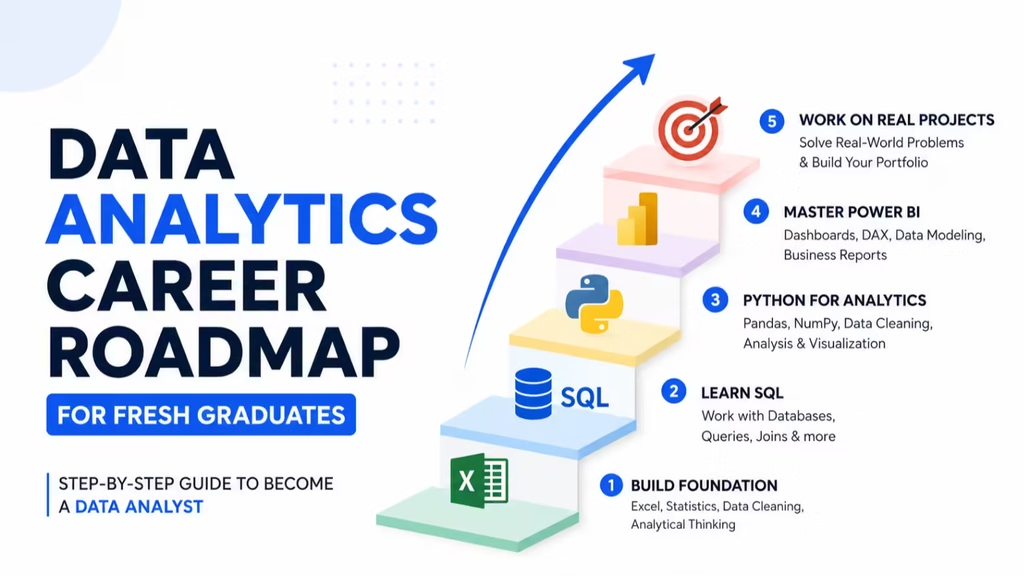
Data Analytics Roadmap for Freshers: A Simple 90-Day Plan
Introduction A data analytics roadmap is a step-by-step plan that shows you what to learn, in what order, to become a data analyst. If you are a fresher,…
Insights
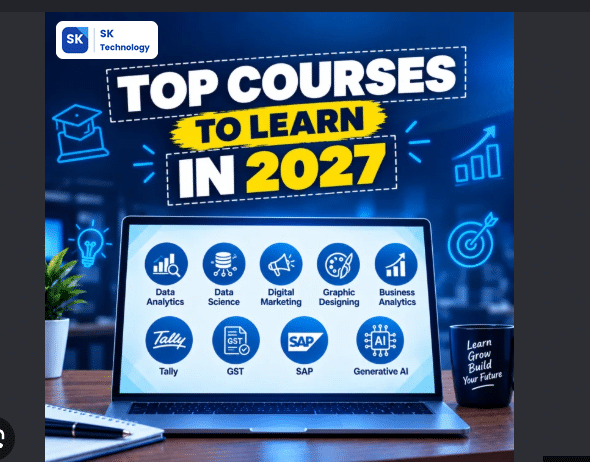
Top IT Skills to Learn in 2027 for High-Paying Jobs
Introduction Top IT skills to learn in 2027 is one of the most common questions among freshers and working professionals who want a high-paying IT job. There are…